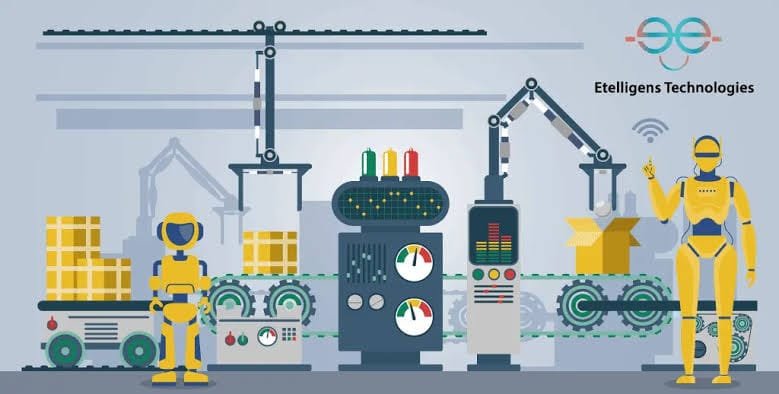
Deep learning is playing an important role in the development of modern robots. It helps robots understand their surroundings, recognise objects, learn movements, and perform tasks with less human guidance.
Traditional robots usually follow fixed instructions. Deep learning-based robots can learn from data and improve their performance through experience. This makes them useful in industries, hospitals, warehouses, homes, and research laboratories.
How Deep Learning Works in Robotics
Robots collect information through cameras, microphones, pressure sensors, and other devices. Deep learning models process this information and help the robot decide what action to take.
The process generally includes:
- Perception: Understanding objects, people, and surroundings.
- Object Recognition: Identifying tools, products, or obstacles.
- Movement Planning: Selecting the correct movement or path.
- Decision-Making: Choosing an action based on the situation.
- Learning from Experience: Improving performance using collected data.
This allows robots to handle tasks that may be difficult to program using fixed rules.
Applications of Deep Learning in Robotics
Industrial Robots
Factories use intelligent robots for assembly, inspection, packaging, and quality control. Deep learning helps these robots identify defective products and adjust their actions according to production requirements.
Warehouse Robots
Warehouse robots can identify packages, move goods, and plan efficient routes. Deep learning helps them recognise obstacles and work safely alongside human employees.
Healthcare Robots
In healthcare, robots may assist with rehabilitation, patient monitoring, surgery support, and medicine delivery. Deep learning helps them interpret medical images, recognise movements, and perform precise tasks.
Service Robots
Service robots are used in hotels, restaurants, offices, and homes. They can understand voice commands, recognise people, deliver items, and provide basic assistance.
Agricultural Robots
Agricultural robots use cameras and sensors to identify crops, weeds, fruits, and soil conditions. Deep learning helps them perform tasks such as harvesting, spraying, and crop monitoring.
Role of Computer Vision
Computer vision is a major part of deep learning-based robotics. It allows robots to understand visual information from cameras.
For example, a robot may use computer vision to:
- Detect objects on a table
- Identify a specific product
- Recognise human gestures
- Avoid obstacles
- Find damaged items
- Understand indoor and outdoor environments
This capability helps robots work in changing environments instead of depending only on fixed positions.
Benefits of Deep Learning in Robotics
Deep learning provides several benefits to robotics:
- Better object recognition
- Improved movement accuracy
- Ability to learn from experience
- Greater flexibility in complex environments
- Reduced need for manual programming
- Increased productivity
- Support for dangerous or repetitive tasks
Robots can also work continuously and provide consistent performance when properly designed and maintained.
Challenges
Deep learning-based robots require large amounts of training data and powerful computing systems. Training can be expensive and time-consuming.
Other challenges include:
- Safety around humans
- Difficulty handling unexpected situations
- High development costs
- Sensor errors
- Cybersecurity risks
- Limited ability to understand human emotions and intentions
- Need for regular testing and maintenance
Robots must be carefully designed because an incorrect decision can cause physical damage or safety risks.
Future of Deep Learning in Robotics
Future robots may become more capable of understanding natural language, learning new tasks, and cooperating with humans. Advances in deep learning may also help robots perform household work, assist older adults, and operate in difficult environments such as disaster zones or space missions.
However, responsible development, safety testing, and human supervision will remain essential.
Conclusion
Deep learning is helping robots become more intelligent, flexible, and useful. It supports perception, object recognition, movement planning, and decision-making across many industries.
Although challenges related to cost, safety, and reliability remain, deep learning will continue to be an important technology in the future of robotics.